---
title: Can You Take The Abortion Pill Without an Ultrasound?
description: Learn why an ultrasound is essential before taking the abortion pill to ensure your safety and make an informed decision.
image: https://alphahealthnetwork.com/hubfs/iStock-2149485810.jpg
---
[Skip to Content](https://alphahealthnetwork.com/helpful-advice/abortion-pill-ultrasound#main-content)
- [Call Jackson Center: (251) 246-7750](tel:+12512467750)
- [Call Monroeville Center: (251) 589-9435](tel:+12515899435)
[](https://alphahealthnetwork.com)
- [Home](https://alphahealthnetwork.com)
- Show submenu for FAQs
FAQs
- [First Appointment Expectations](https://alphahealthnetwork.com/what-to-expect)
- [About Abortion](https://alphahealthnetwork.com/abortion-faqs)
- [About the Abortion Pill](https://alphahealthnetwork.com/abortion-pill-faqs)
- [About Pregnancy](https://alphahealthnetwork.com/pregnancy-faqs)
- [About STI/STDs](https://alphahealthnetwork.com/about-sti)
- Show submenu for Services
Services
- [Pre-Abortion Screening](https://alphahealthnetwork.com/pre-abortion-screenings)
- [Pregnancy Tests](https://alphahealthnetwork.com/free-pregnancy-tests)
- [Ultrasounds](https://alphahealthnetwork.com/ultrasound)
- [STI/STD Tests](https://alphahealthnetwork.com/std-sti-tests)
- [Abortion Pill Reversal](https://alphahealthnetwork.com/abortion-pill-reversal)
- [Prenatal & Parenting Services](https://alphahealthnetwork.com/prenatal-parenting-support)
- Show submenu for Counseling Services
[Counseling Services](https://alphahealthnetwork.com/counseling)
- [Miscarriage Support](https://alphahealthnetwork.com/miscarriage-support)
- [After Abortion Recovery](https://alphahealthnetwork.com/after-abortion-recovery)
- [Adoption Information](https://alphahealthnetwork.com/adoption-information)
- Show submenu for Locations
Locations
- [Jackson Center](https://alphahealthnetwork.com/jackson)
- [Monroeville Center](https://alphahealthnetwork.com/monroeville)
- [Helpful Advice](https://alphahealthnetwork.com/helpful-advice)
[Make Appointment](https://alphahealthnetwork.com/make-appointment)
[Home](https://alphahealthnetwork.com)
Show submenu for FAQs
FAQs
[First Appointment Expectations](https://alphahealthnetwork.com/what-to-expect)
[About Abortion](https://alphahealthnetwork.com/abortion-faqs)
[About the Abortion Pill](https://alphahealthnetwork.com/abortion-pill-faqs)
[About Pregnancy](https://alphahealthnetwork.com/pregnancy-faqs)
[About STI/STDs](https://alphahealthnetwork.com/about-sti)
Show submenu for Services
Services
[Pre-Abortion Screening](https://alphahealthnetwork.com/pre-abortion-screenings)
[Pregnancy Tests](https://alphahealthnetwork.com/free-pregnancy-tests)
[Ultrasounds](https://alphahealthnetwork.com/ultrasound)
[STI/STD Tests](https://alphahealthnetwork.com/std-sti-tests)
[Abortion Pill Reversal](https://alphahealthnetwork.com/abortion-pill-reversal)
[Prenatal & Parenting Services](https://alphahealthnetwork.com/prenatal-parenting-support)
Show submenu for Counseling Services
[Counseling Services](https://alphahealthnetwork.com/counseling)
[Miscarriage Support](https://alphahealthnetwork.com/miscarriage-support)
[After Abortion Recovery](https://alphahealthnetwork.com/after-abortion-recovery)
[Adoption Information](https://alphahealthnetwork.com/adoption-information)
Show submenu for Locations
Locations
[Jackson Center](https://alphahealthnetwork.com/jackson)
[Monroeville Center](https://alphahealthnetwork.com/monroeville)
[Helpful Advice](https://alphahealthnetwork.com/helpful-advice)
[Make Appointment](https://alphahealthnetwork.com/make-appointment)
# Can You Take The Abortion Pill Without an Ultrasound?
Need answers now? Call us for free, confidential support during business hours at our Jackson Center at (251) 246-7750 or our Monroeville Center at (251) 589-9435.
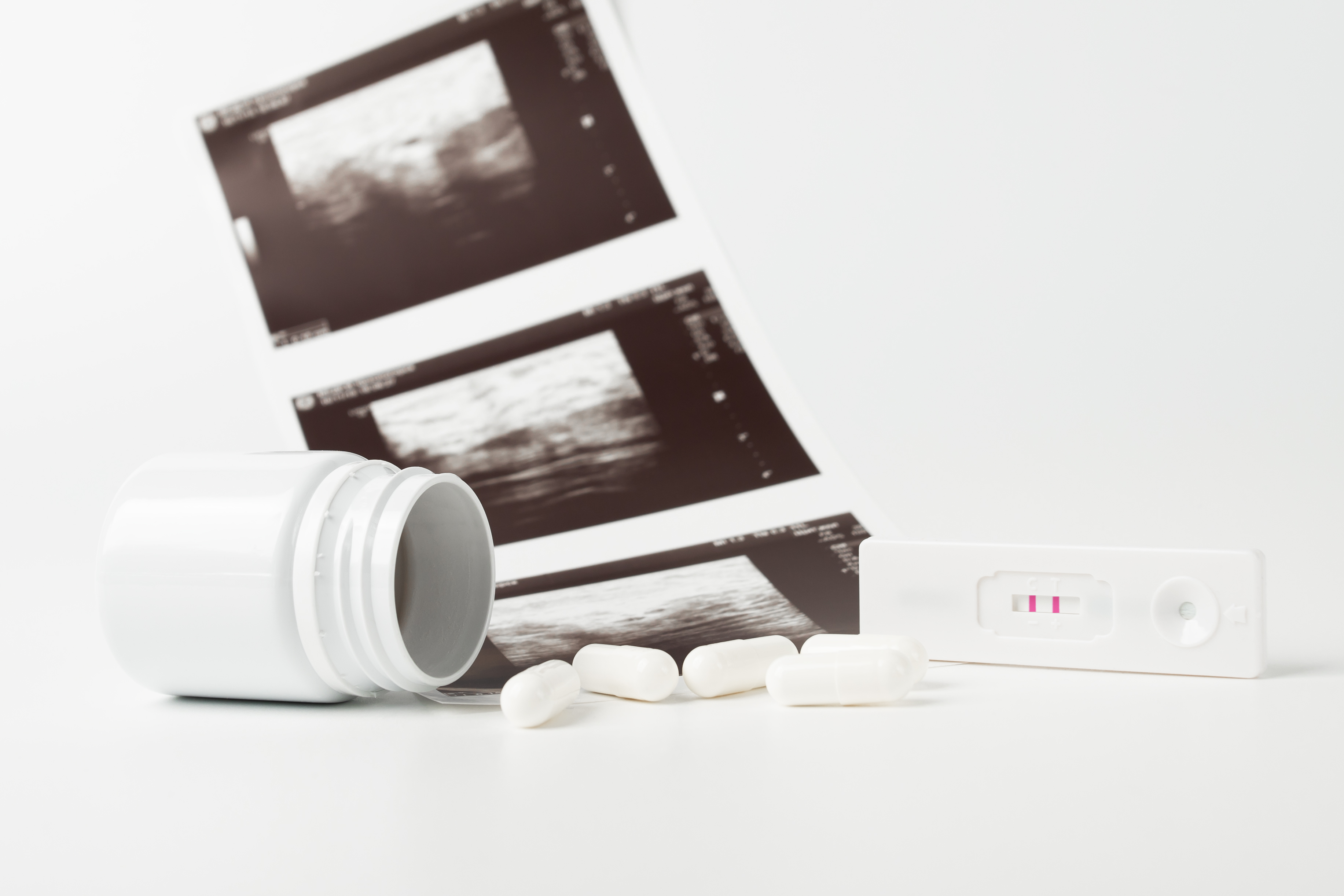
If you’re thinking about taking the abortion pill, it’s normal to wonder whether an ultrasound is really necessary. An ultrasound isn’t just a medical formality—it’s an essential step to protect your health.
## Why an Ultrasound Is Critical Before Taking the Abortion Pill
This simple, safe scan helps determine how far along the pregnancy is and confirms that the pregnancy is developing inside the uterus.
These details matter because the abortion pill is only FDA-approved for use up to 10 weeks (70 days) from the start of your last period.1 Knowing exactly where the pregnancy is located and how far along it is ensures that you can make an informed and safe decision.
#### Finding the Fetus
The abortion pill is approved for early pregnancies, but not all pregnancies develop the same way. An ultrasound can confirm:
- Gestational age – how far along the pregnancy is.
- Location of the pregnancy – whether it’s in the uterus or ectopic (outside the uterus).
An ectopic pregnancy cannot be treated with abortion pills and can become life-threatening if it goes undetected. That’s why getting an ultrasound before taking any medication is not just recommended—it’s vital for your safety and peace of mind.
### How the Abortion Pill Works
The abortion pill process, also called medication abortion, involves two drugs:
- Mifepristone, which blocks the hormone progesterone needed to sustain pregnancy.
- Misoprostol, which causes uterine contractions to empty the uterus.
This method is designed for early pregnancy only. However, about 10–20% of known pregnancies naturally end in miscarriage.2 A positive pregnancy test alone cannot confirm that a pregnancy is viable. An ultrasound verifies that the pregnancy is developing and not miscarried or ectopic before moving forward.3
Knowing this information protects your body and helps ensure that your next steps—whatever they may be—are made with complete understanding and safety.
##### When Not to Use the Abortion Pill
The abortion pill is not suitable for everyone. Certain health conditions, medications, or risk factors may make it unsafe. For example, women with bleeding disorders, severe anemia, or suspected ectopic pregnancy should not use abortion pills.
Only a medical professional can confirm whether this method is safe for your body. An ultrasound and health screening give you the clarity needed to make a confident, informed choice.
## Assessing Risks and Considerations
Every pregnancy decision is deeply personal, and it’s okay to have mixed feelings. While many women see medication abortion as a simple process, it still carries risks. Possible complications include:
- Incomplete abortion requiring further medical care
- Heavy or prolonged bleeding
- Infection
- Rare but serious medical emergencies
Skipping an ultrasound increases these risks because it leaves unanswered questions—like how far along the pregnancy is or whether it’s ectopic.
Understanding these details allows you to make an informed, empowered decision for your body and your future.
## Get Help Determining Your Options
If you’re unsure what to do next, you don’t have to figure it out alone. At Alpha Women’s Resource Center, you can talk with caring medical professionals who will listen without judgment and help you [explore every option available](https://alphahealthnetwork.com/abortion).
We offer free and confidential services, including:
- Medical-grade pregnancy testing
- Limited obstetric ultrasounds
- Education about all pregnancy options
You deserve care that puts your safety first and gives you space to make decisions with confidence.
Call us for free, confidential support during business hours at our Jackson Center at (251) 246-7750 or our Monroeville Center at (251) 589-9435 and [schedule your free, confidential appointment](https://alphahealthnetwork.com/make-appointment).
---
###### Sources:
1\. https://www.fda.gov/drugs/postmarket-drug-safety-information-patients-and-providers/information-about-mifepristone-medical-termination-pregnancy-through-ten-weeks-gestation
2\. https://www.mayoclinic.org/diseases-conditions/pregnancy-loss-miscarriage/symptoms-causes
3\. https://my.clevelandclinic.org/health/diagnostics/9704-ultrasound-in-pregnancy
[](https://243103742.hs-sites-na2.com/home)
###### Quick Links

- [Jackson Location](https://alphahealthnetwork.com/jackson)
- [Monroeville Location](https://alphahealthnetwork.com/monroeville)
- [Contact Us](https://alphahealthnetwork.com/contact)
- [Make Appointment](https://alphahealthnetwork.com/make-appointment)
###### Locations

**Jackson**
6479 Hwy 43 N
Jackson, AL 36545
[**Get Directions**](https://www.google.com/maps/place/Alpha+Health+Network/@31.5756995,-87.8857059,17z/data=!3m1!4b1!4m6!3m5!1s0x889ac977c42329e7:0x239d41ccac8fe6d8!8m2!3d31.575695!4d-87.883131!16s%2Fg%2F11cn3m1hx7?entry=tts&g_ep=EgoyMDI1MDcwNy4wIPu8ASoASAFQAw%3D%3D&skid=0da252ea-874e-401a-a322-8c92c232a95f)
**Monroeville**
1530 S Alabama Avenue, Ste #4
Monroeville, AL 36460
[**Get Directions**](https://maps.app.goo.gl/1AKs3A3KCvKZb5SVA)
###### Here for You

Alpha Women's Resource Center does not offer or refer for pregnancy terminations or birth control. Information is provided as an educational service.
**We do provide the essential services you need before an abortion** with a free, non-judgmental [pre-abortion screening](https://alphahealthnetwork.com/pre-abortion-screenings). We do not profit from any decisions you make.
\*Image Disclaimer: Some images feature models or have been digitally enhanced. They're simply here to help tell our story and don't represent anyone's personal or medical experience.
© 2026 Alpha Women's Resource Center. All Rights Reserved.
- [Privacy Policy](https://alphahealthnetwork.com/privacy-policy)
```json
{
"@context" : "https://schema.org",
"@type" : "BlogPosting",
"author" : {
"@type" : "Person",
"name" : "Alpha Women's Resource Center",
"url" : "https://alphahealthnetwork.com/helpful-advice/author/alpha-womens-resource-center"
},
"dateModified" : "2026-08-06T15:48:11.226Z",
"datePublished" : "2025-12-02T22:17:46.000Z",
"headline" : "Can You Take The Abortion Pill Without an Ultrasound?",
"image" : [ "https://alphahealthnetwork.com/hubfs/iStock-2149485810.jpg" ],
"mainEntityOfPage" : {
"@id" : "https://alphahealthnetwork.com/helpful-advice/abortion-pill-ultrasound",
"@type" : "WebPage"
},
"publisher" : {
"@type" : "Organization",
"logo" : {
"@type" : "ImageObject",
"url" : "https://alphahealthnetwork.com/hubfs/AWRC%20Logo%202025.png"
}
}
}
```